Introduction: This article focuses on the actual performance of Taiwanese servers under CN2 (China Unicom/Telecom Interconnect Link) related network paths. By describing test methods, key indicators and influencing factors, it helps operation and maintenance and selection personnel understand the trade-off between delay, packet loss and throughput, and gives actionable optimization suggestions.
In order to ensure that the evaluation is reproducible, the sampling points, test time windows and tools should be stated. For example, multi-line Ping, Traceroute, and iperf3 are used for delay and throughput testing, and samples are taken at different time periods and multiple days to reduce the impact of instantaneous jitter. At the same time, network parameters such as routing hop count, MSS and MTU are recorded.
Network latency is typically measured in round-trip delay (RTT). Using Ping and hping to sample at different packet sizes, you can observe the average, jitter, and highest and worst values. When evaluating, you need to pay attention to the synchronous changes in the peak time period and packet loss to determine whether the delay is caused by link congestion or intermediate routing problems.
Latency is affected by physical distance, routing path, switching equipment forwarding efficiency and link quality. CN2 links usually have a better interconnection strategy on the mainland Internet, but the specific performance depends on the entry and exit point selection, as well as the interconnection agreement and QoS strategy between operators.
Packet loss has a significant impact on TCP throughput and real-time services. Packet loss distribution and persistence can be obtained through long-term ICMP and UDP detection. Stability assessment should include short-term burst packet loss and long-term average packet loss. The two have different impacts on service experience and need to be treated separately.
Use iperf3 or netperf to conduct single-connection and multi-connection throughput tests to measure TCP/UDP upstream and downstream bandwidth respectively. When testing, you should gradually increase concurrent connections to observe the bandwidth inflection point, and pay attention to the interference of the server network card, virtualization speed limit and host load on the results.
The difference between uplink and downlink throughput is often caused by different operator policies and bandwidth allocation in the interconnection direction. During analysis, it is necessary to check the link symmetry, TCP window size and congestion control algorithm, as well as whether there are bandwidth bottlenecks or rate limiting policies on intermediate links.
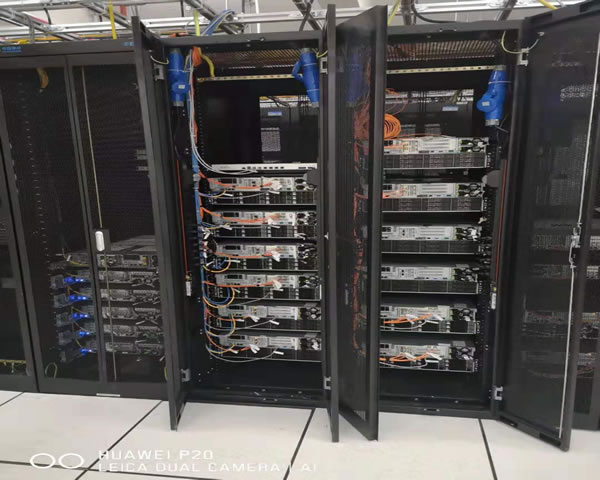
The advantage of the CN2 link is the optimized routing to the mainland, but the actual effect is affected by the entry point selection, interconnection peer relationship and strategy. The evaluation should be combined with Traceroute to analyze routing hops, delay distribution, and whether there is an increase in delay caused by traffic being forwarded by a third party.
The performance of the server in high-concurrency scenarios is affected by the CPU, network stack, and interrupt processing capabilities. Through the mixed test of concurrent short connections and long connections, the connection establishment rate, response delay and throughput stability can be observed, providing a reference for estimating concurrent carrying capacity of actual services.
For the scenario where Taiwan servers connect to CN2, it is recommended to start with routing selection, link redundancy, TCP parameter tuning (such as window size, congestion control) and edge caching. At the same time, monitoring and early warning are combined to detect link abnormalities and trigger traffic switching to maintain business continuity and stable performance.
Summary: Taiwanese servers can usually provide a better mainland Internet experience under CN2 links, but the specific effect depends on the routing strategy, access point and link quality. The evaluation should be conducted over multiple time periods, using multiple tools, and combined with business scenarios. Prioritize observability and elastic redundancy when selecting a model, rather than a single peak throughput data.
- Latest articles
- Factors Affecting Cloud Server Prices In Malaysia And Cost-saving Strategies
- Compliance Points: How To Join The Korean Purchasing Group? Payment Logistics And Tax Processing Instructions
- Detailed Explanation Of The Usefulness Of Hong Kong Site Group And Prevention And Control Measures That Coexist With Legal And Compliance Risks
- Cost-effectiveness Analysis Of US Vps Suitable For Domestic Users To Buy Airport Merchant Rankings
- Evaluation Of The Impact Of Partner Selection On US Companies’ Entry Into Japanese Server Projects
- Practical Guide And Advice On Choosing The Most Stable PUBG Server In South Korea
- How Does Cross-border Business Use Cloud Servers? Singapore Servers Improve Access Experience
- How To Enter The Vietnam Server Now? A List Of Graphic Steps And Common Misunderstandings That Even Beginners Can Understand.
- How Does An Enterprise Choose A Hosting Plan That Supports Multiple IPs For US Site Group Servers?
- Looking At The Stability And Compliance Requirements Of Cross-border Transactions From The Futian Hong Kong Station Group Server
- Popular tags
-

Taiwan Server Two-way Cn2 Cloud Space Security And Backup Best Practices
introduces the best practices for cloud space security and backup in taiwan's two-way cn2 server environment, including network and transmission protection, host and application security, backup strategies, compliance and drill recommendations. it is a practical guide suitable for taiwan and cross-strait network scenarios. -

A Comprehensive Guide From Configuration To Operation And Maintenance: Key Points For Choosing Taiwan VPS CN2 Cloud Servers
This article provides a systematic analysis of the key factors to consider when choosing VPS CN2 cloud servers in Taiwan, covering aspects such as network latency, bandwidth, hardware configuration, security measures, and operational support, to help technology and product decision-makers make efficient comparisons and deployments. -

Five Reasons To Choose Taiwan Vps Cn2 Service
explore the five reasons to choose taiwan vps cn2 service and learn about its advantages in network performance, stability and security.